Pollsters spent four years preparing to better capture Trump support and avoid a repeat of 2016. Somehow, they missed it again.
from Feed: All Latest https://ift.tt/3p04yav
from Feed: All Latest https://ift.tt/3p04yav





 Thursday, November 05, 2020
 MZ Digital Marketing Agency
 TECHNOLOGY NEWS
 No commentsThursday, May 21, 2020MZ Digital Marketing AgencyTECHNOLOGY NEWSNo comments
You won’t have to wait too much longer for a Serious Sam revival. Croteam and Devolver Digital have announced that Serious Sam 4 will be available on PC and Google Stadia sometime in August. Consoles will be a no-show at launch due to a Stadia exclusive, Devolver told Kotaku. However, the publisher told Engadget that PlayStation and Xbox versions should arrive in early 2021.
As for the mechanics? For the most part, you know what to expect if you’ve ever played a Serious Sam game: your job is to save the world from Mental’s forces by shooting seemingly endless waves of ridiculous enemies. The difference is in the execution. It’s a huge visual upgrade over past titles, of course, but new technology also allows situations where you’re fighting “thousands” of enemies at a time. There are new foes like the Belcher and new weapons like an auto shotgun, but it’s clear you’ll feel at home whether you’re playing by yourself or in a four-player co-op mode. This is for gamers who miss the classic, arcade-like feel of early first-person shooters and don’t mind threadbare stories.
Tuesday, May 12, 2020MZ Digital Marketing AgencyTECHNOLOGY NEWSNo comments Illustration by Alex Castro / Th
Slack announced a redesigned iPhone app with a new navigation bar at the bottom of the app in update notes today. However, it seems the redesign is still rolling out, even if you’ve updated to the latest version of the app — myself and another Verge colleague don’t have it yet, for example.
The new look appears to bring the iPhone app in line with the Android redesign that rolled out on May 5th. “Previously, it was complicated to get to the four main things people do on mobile,” Slack said in the App Store update notes. “We’ve fixed this with a new nifty navigation bar at the bottom of the app containing: a Home view for your sidebar, DMs, (still listed most recent first), Mentions (for quickly catching up), and You (because you’re great) (and also because setting your status/preferences on mobile needed to be easier).”
Here are some screenshots from the App Store of what the redesign looks like:
 Image: Slack
The update also adds a floating compose button in many places throughout the app as well as the ability to order your channels in the “Home” tab, much like how you can order your channels in Slack’s recent desktop redesign. You may also have to re-adjust some of your muscle memory when using the app, as some of the swiping behaviors have changed. “Now, swiping right will reveal your workspace and preferences, and swiping left will get you back to the last conversation you were in,” Slack says in the update notes. The update appears specific to the iPhone version of the app, meaning the iPad version remains the same for now.
If you don’t have the redesign yet, it seems likely the update will be available more broadly soon, since Slack has laid out all of the new features of the update in the App Store already.
Tuesday, May 12, 2020MZ Digital Marketing AgencyTECHNOLOGY NEWSNo comments Image: Twitch
Twitch is now selling official gift cards you can use to buy items on the popular streaming platform, the company announced today. Despite being a free service, Twitch offers a number of ways you can spend money, including buying subscriptions to channels and paying for Twitch’s “Bits” virtual currency, and the new gift cards can be put towards those purchases.
You can buy the gift cards here. They’re available in $25, $50, $100, and $200 denominations, and they can be sent over email or text message. You can only get them digitally at the moment, but they’ll be available at Best Buy and GameStop “soon,” according to Twitch’s announcement blog. They’re also only available to US residents for now, but “we are looking to offer them in other countries soon,” according to Twitch.
Saturday, May 09, 2020MZ Digital Marketing AgencyTECHNOLOGY NEWSNo comments
Enlarge / Rick Bright, head of the Biomedical Advanced Research and Development Authority, listens during a House Oversight and Investigations Subcommittee hearing on Thursday, March 8, 2018. In the background is Anthony Fauci, director of the National Institute of Allergy and Infectious Diseases. (credit: Getty Images | Bloomberg)
The Trump administration is facing pressure from a federal watchdog agency to reinstate the whistleblower who President Trump claimed is "a disgruntled employee who's trying to help the Democrats win an election."
Rick Bright, an immunology expert who led the Biomedical Advanced Research and Development Authority (BARDA) until he says he was forced out of his position, reportedly got good news from the US Office of Special Counsel, which is investigating his whistleblower complaint.
"A federal investigative office has found 'reasonable grounds to believe' that the Trump administration was retaliating against a whistleblower, Dr. Rick Bright, when he was ousted from a government research agency combating the coronavirus—and said he should be reinstated for 45 days while it investigates, his lawyers said Friday," The New York Times wrote.
Read 8 remaining paragraphs | Comments


 Sunday, May 03, 2020MZ Digital Marketing AgencyTECHNOLOGY NEWSNo commentsThursday, April 30, 2020MZ Digital Marketing AgencyTECHNOLOGY NEWSNo comments
Tesla said it will reduce the price of its standard range Model 3 vehicle in China to meet the government’s new eligibility requirements for subsidies.
This marks the second time this year that the automaker has reduced the price. Several months ago, the base version of China-made Model 3 was lowered by 9%.
Tesla has to cut the price of the vehicle to continue to qualify for government rebates on electric vehicles. The Chinese government instituted new regulations that require prices below 300,000 yuan for electric vehicles to qualify for subsidies.
The base price of the standard range Model 3 made in China is 323,800 yuan, or $45,754 before subsidies.
The price reduction will go into effect tomorrow in China, Tesla CEO Elon Musk said in a earnings call Wednesday. Musk, who didn’t provide a specific figure, said he is confident the vehicle will deliver a gross margin despite the reduction in price.
Tesla chief financial officer Zachary Kirkhorn added that the cost of vehicles produced at its Shanghai factory in the first quarter is already lower than the cost to produce the Model 3 in the United States. That margin should improve as the company improves its local supply chain in China. Tesla still ships some parts from the U.S. to build cars at its Shanghai factory.


 Wednesday, April 22, 2020MZ Digital Marketing AgencyTECHNOLOGY NEWSNo comments

Enlarge / Dr. Jane Goodall walking with local villagers and staff members of TACARE, one of the many programs of the Jane Goodall Institute. (credit: Michael Haertlein/National Geographic)
A few years ago, National Geographic released a beautifully filmed biopic called Jane on famed primatologist Jane Goodall. The film helped explain how someone with no scientific experience ended up in Africa studying chimpanzees in the hope it would shed light on the origins of human behavior. But, despite a compelling story and restored archival footage, Jane seemed incomplete. While it told the story of how Goodall ended up both a scientist and a public figure, the scenes of her in the present day (to the extent pre-2017 resembles the present day) show that she's left her research behind to become an advocate for conservation.
How she went from the researcher shown in Jane to the head of an international non-profit was left as an exercise to the viewer to figure out. So, I was excited to see that National Geographic had a follow-up documentary, Jane Goodall: The Hope, in the works. What follows is part review and part interview with Goodall.
For me, the hope was that The Hope would trace how Goodall managed the transition from researcher to international environmental advocate. Instead, the film simply gives a picture of what her life is like today, moving among her projects and following her hectic travel schedule. In that sense, the two documentaries act more like bookends on her career.
Read 10 remaining paragraphs | Comments

 Sunday, April 19, 2020MZ Digital Marketing AgencyTECHNOLOGY NEWSNo comments
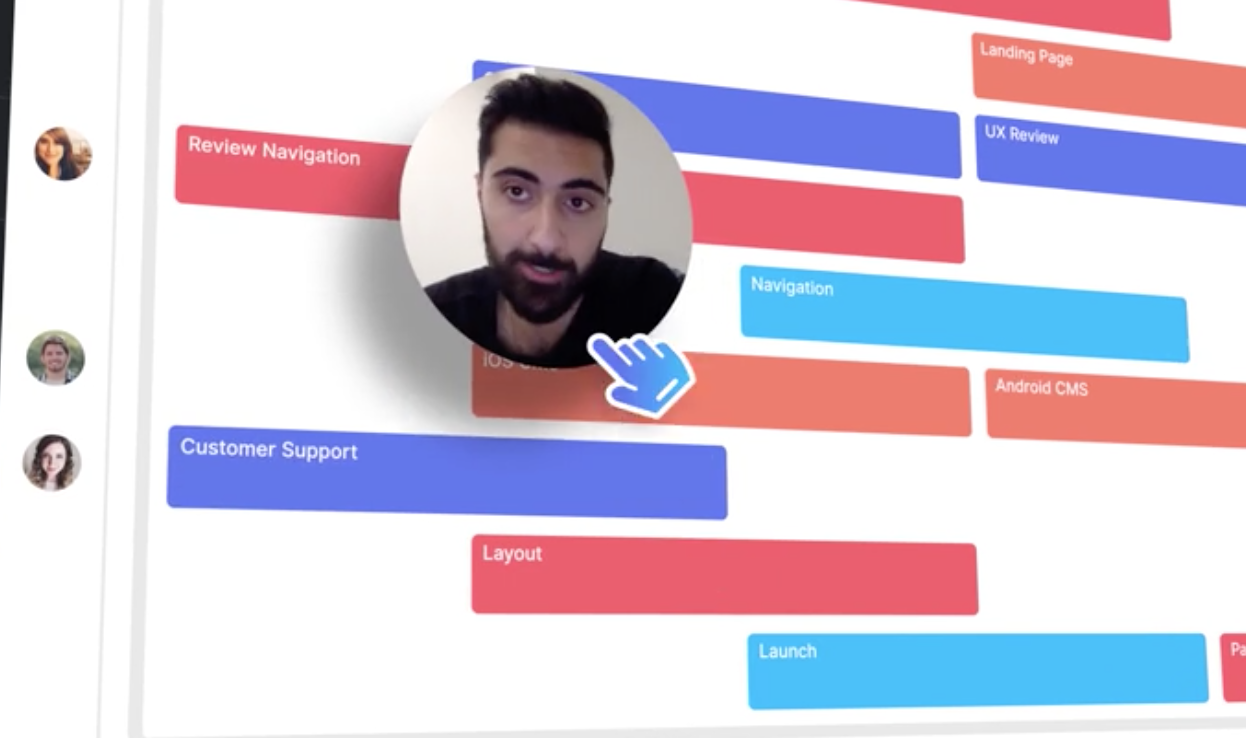
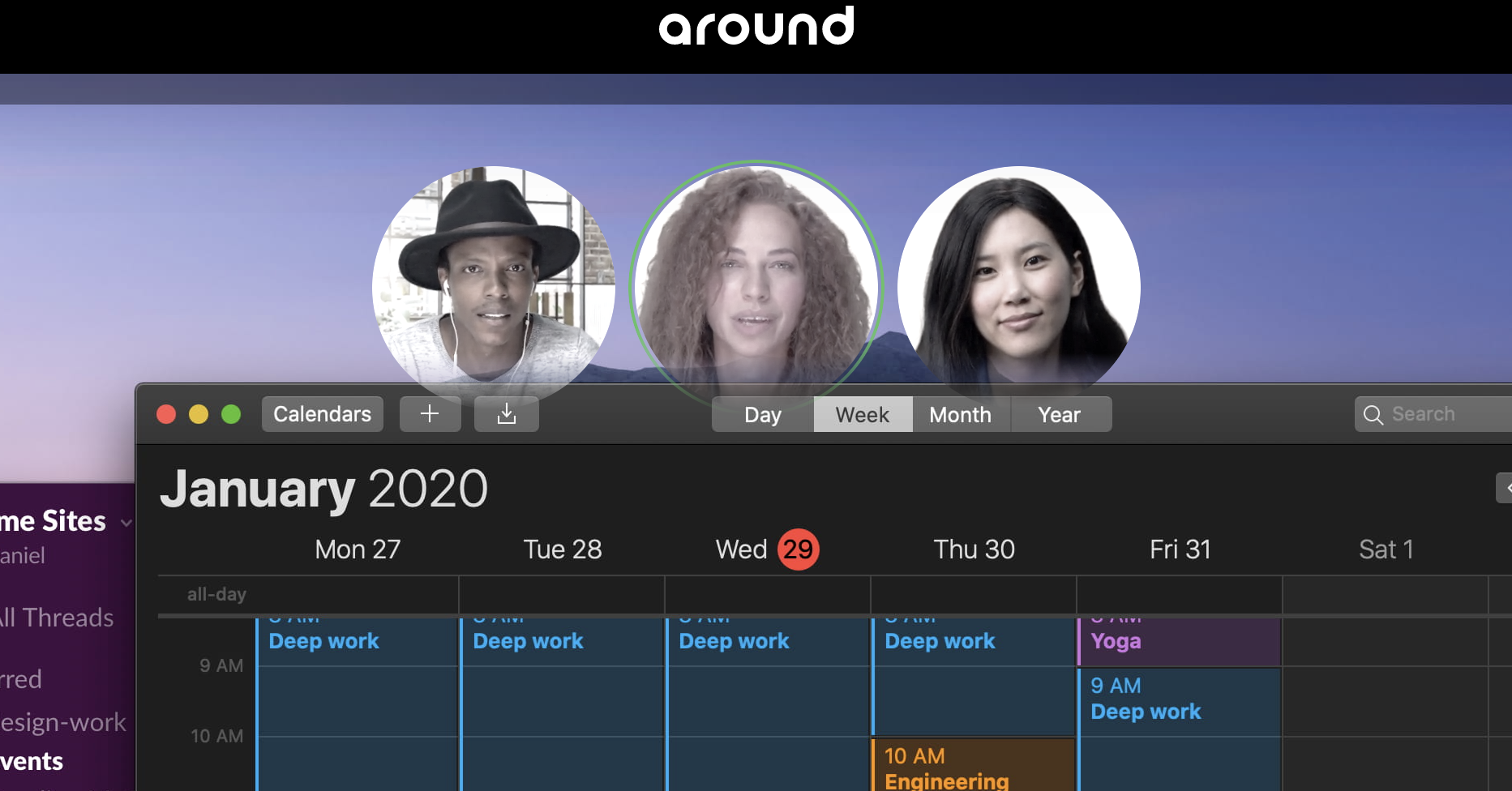
Forget the calendar invite. Just jump into a conversation. That’s the idea powering a fresh batch of social startups poised to take advantage of our cleared schedules amidst quarantine. But they could also change the way we work and socialize long after COVID-19 by bringing the free-flowing, ad-hoc communication of parties and open office plans online. While “Live” has become synonymous with performative streaming, these new apps instead spread the limelight across several users as well as the task, game, or discussion at hand.
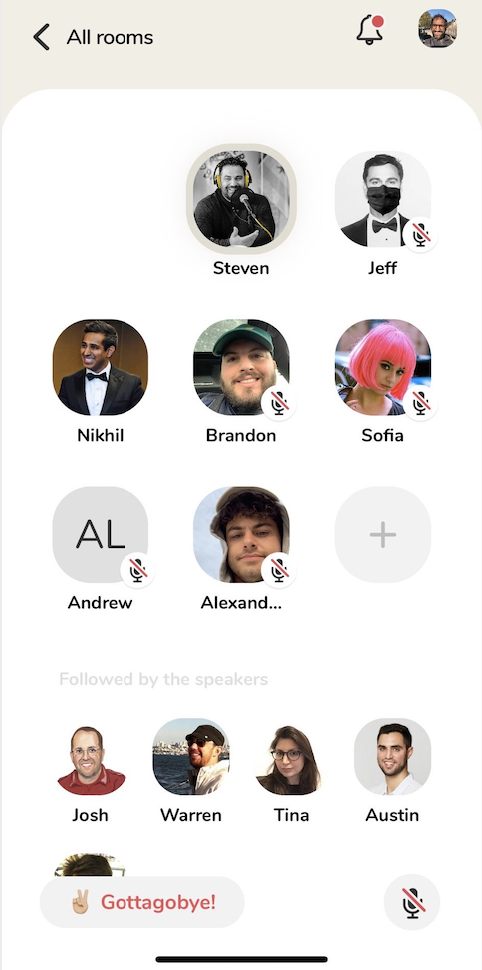 The most buzzy of these startups is Clubhouse, an audio-based social network where people can spontaneously jump into voice chat rooms together. You see the unlabeled rooms of all the people you follow, and you can join to talk or just listen along, milling around to find what interests you. High-energy rooms attract crowds while slower ones see participants slip out to join other chat circles.
Clubhouse blew up this weekend on VC Twitter as people scrambled for exclusive invites, humblebragged about their membership, or made fun of everyone’s FOMO. For now, there’s no public app or access. The name Clubhouse perfectly captures how people long to be part of the in-crowd.
Clubhouse was built by Paul Davison, who previously founded serendipitous offline people-meeting location app Highlight and reveal-your-whole-camera-roll app Shorts before his team was acquired by Pinterest in 2016. This year he debuted his Alpha Exploration Co startup studio and launched Talkshow for instantly broadcasting radio-style call-in shows. Spontaneity is the thread that ties Davison’s work together, whether its for making new friends, sharing your life, transmitting your thoughts, or having a discussion.
It’s very early days for Clubhouse. It doesn’t even have a website. There’s no telling exactly what it will be like if or when it officially launches, and Davison declined to comment. But the positive reception shows a desire for a more immediate, multi-media approach to discussion that updates what Twitter did with text.
What quarantine has revealed is that when you separate everyone, spontaneity is a big thing you miss. In your office, that could be having a random watercooler chat with a co-worker or commenting aloud about something funny you found on the internet. At a party, it could be wandering up to chat with group of people because you know one of them or overhear something interesting. That’s lacking while we’re stuck home since we’ve stigmatized randomly phoning a friend, differing to asynchronous text despite its lack of urgency.
Clubhouse founder Paul Davison. Image Credit: JD Lasica
Scheduled Zoom calls, utilitarian Slack threads, and endless email chains don’t capture the thrill of surprise or the joy of conversation that giddily revs up as people riff off each other’s ideas. But smart app developers are also realizing that spontaneity doesn’t mean constantly interrupting people’s life or workflow. They give people the power to decide when they are or aren’t available or signal that they’re not to be disturbed so they’re only thrust into social connection when they want it.
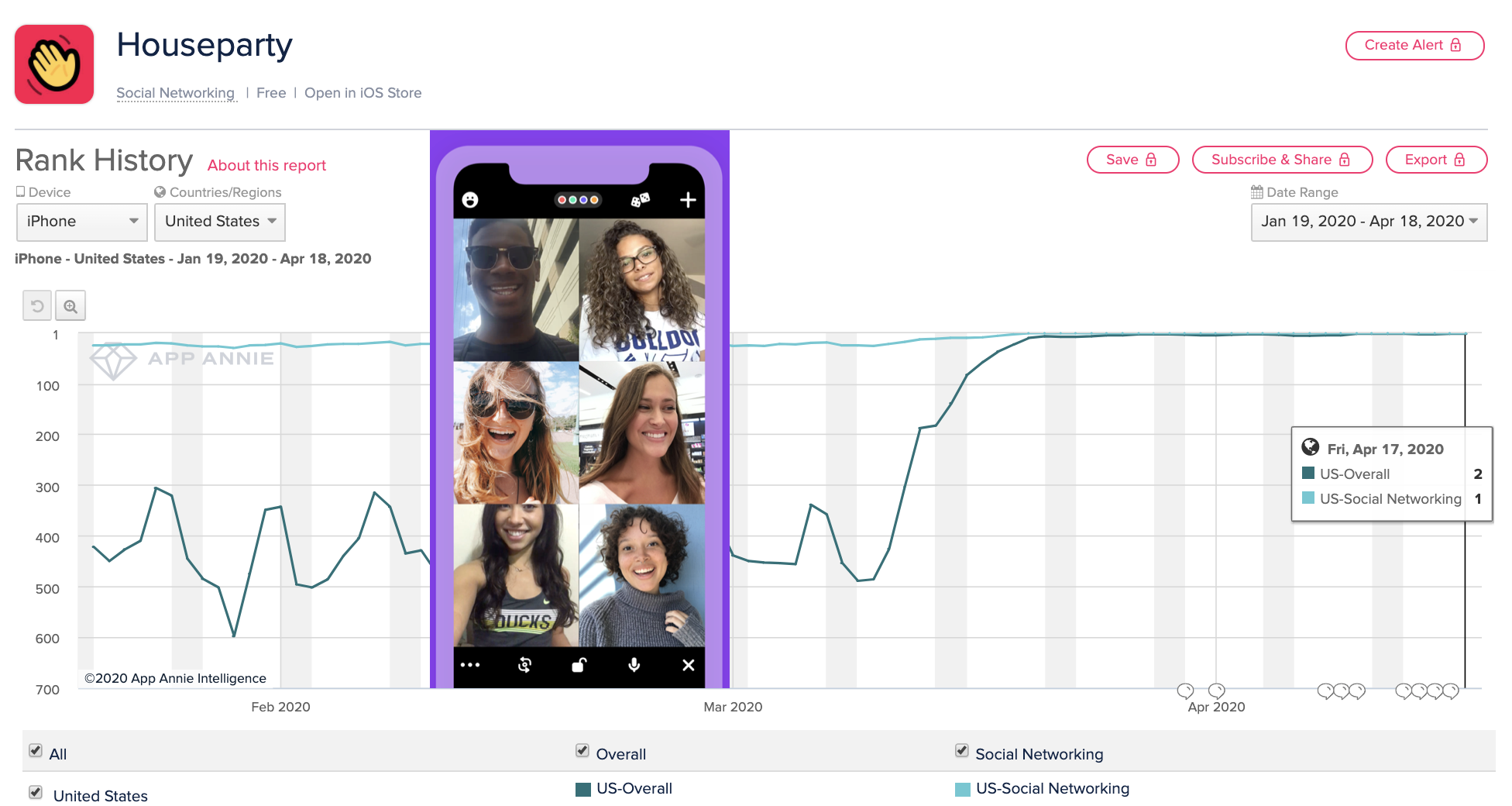
Houseparty chart ranks via AppAnnie
Houseparty embodies this spontaneity. It’s become the breakout hit of quarantine by letting people on a whim join group video chat rooms with friends the second they open the app. It saw 50 million downloads in a month, up 70X over its pre-COVID levels in some places. It’s become the #1 social app in 82 countries including the US, and #1 overall in 16 countries.
Originally built for gaming, Discord lets communities spontaneously connect through persistent video, voice, and chat rooms. It’s seen a 50% increase in US daily voice users with spikes in shelter-in-place early adopter states like California, New York, New Jersey, and Washington. Bunch, for video chat overlayed on mobile gaming, is also climbing the charts and going mainstream with its user base shifting to become majority female as they talk for 1.5 million minutes per day. Both apps make it easy to join up with pals and pick something to play together.
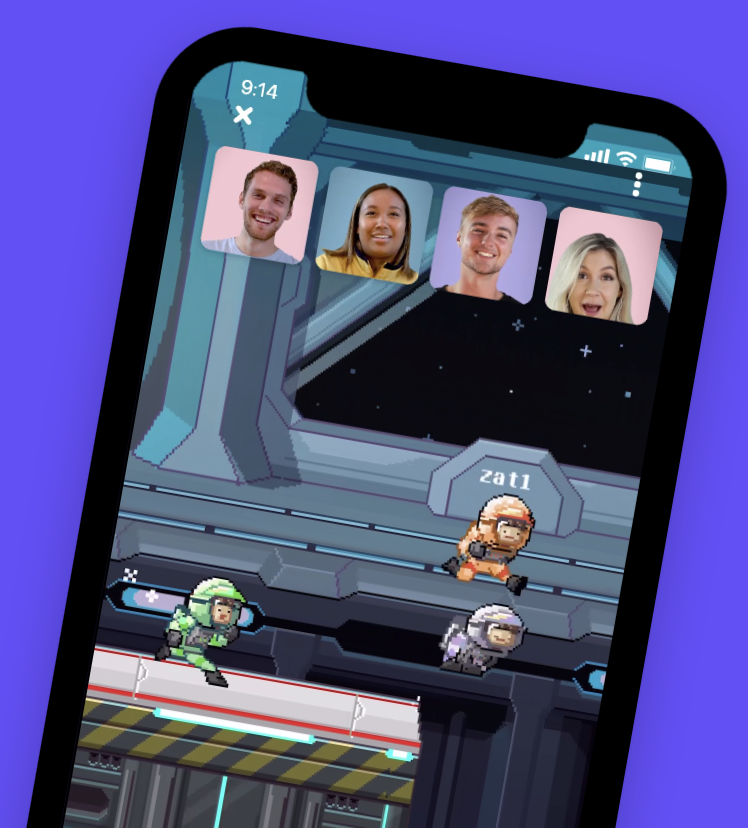
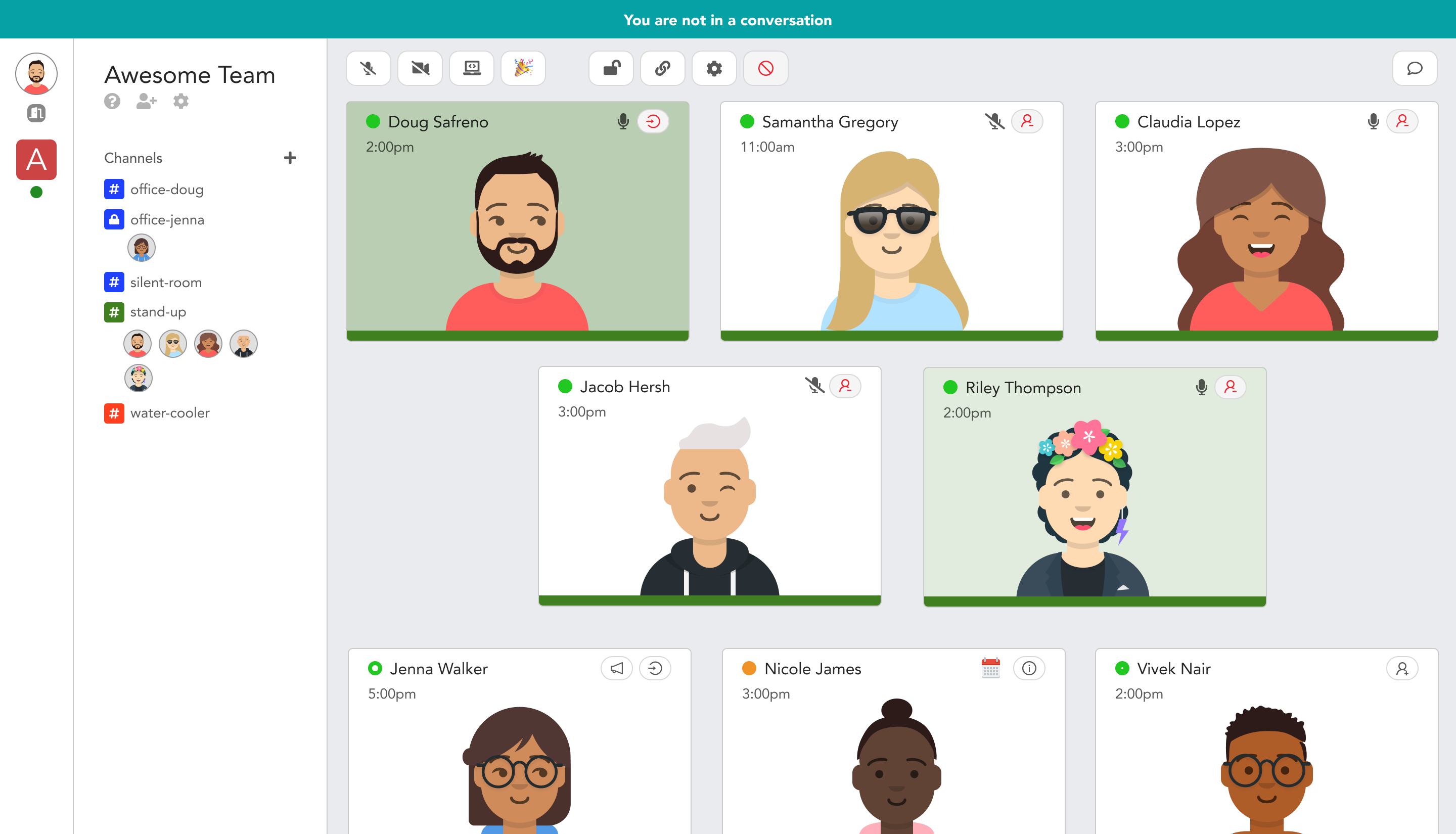
Enterprise video chat tools are adapting to spontaneity as an alternative to heavy-handed, pre-meditated Zoom calls. There’s been a backlash as people realize they don’t get anything done by scheduling back-to-back video chats all day.
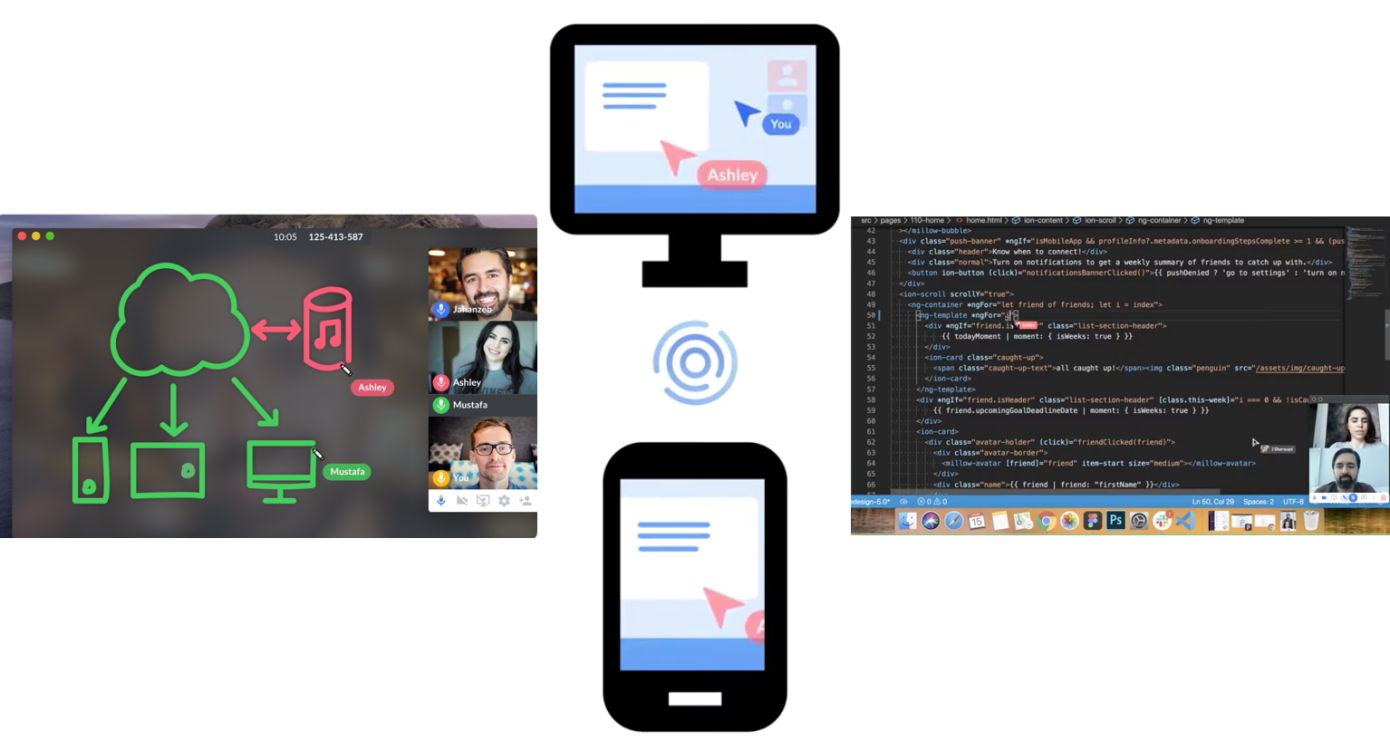
Screen
While visual communication has been the breakout feature of our mobile phones by allowing us to show where we are, shelter-in-place means we don’t have much to show. That’s expanded the opportunity for tools that take a less-is-more approach to spontaneous communication. Whether for remote partying or rapid problem solving, new apps beyond Clubhouse are incorporating voice rather than just video. Voice offers a way to rapidly exchange information and feel present together without dominating our workspace or attention, or forcing people into an uncomfortable spotlight.
High Fidelity is Second Life co-founder Philip Rosedale’s $72 million-funded current startup. After recently pivoting away from building a virtual reality co-working tool, High Fidelity has begun testing a voice and headphones-based online event platform and gathering place. The early beta lets users move their dot around a map and hear the voice of anyone close to them with spatial audio so voices get louder as you get closer to someone, and shift between your ears as you move past them. You can spontaneously approach and depart little clusters of dots to explore different conversations within earshot.
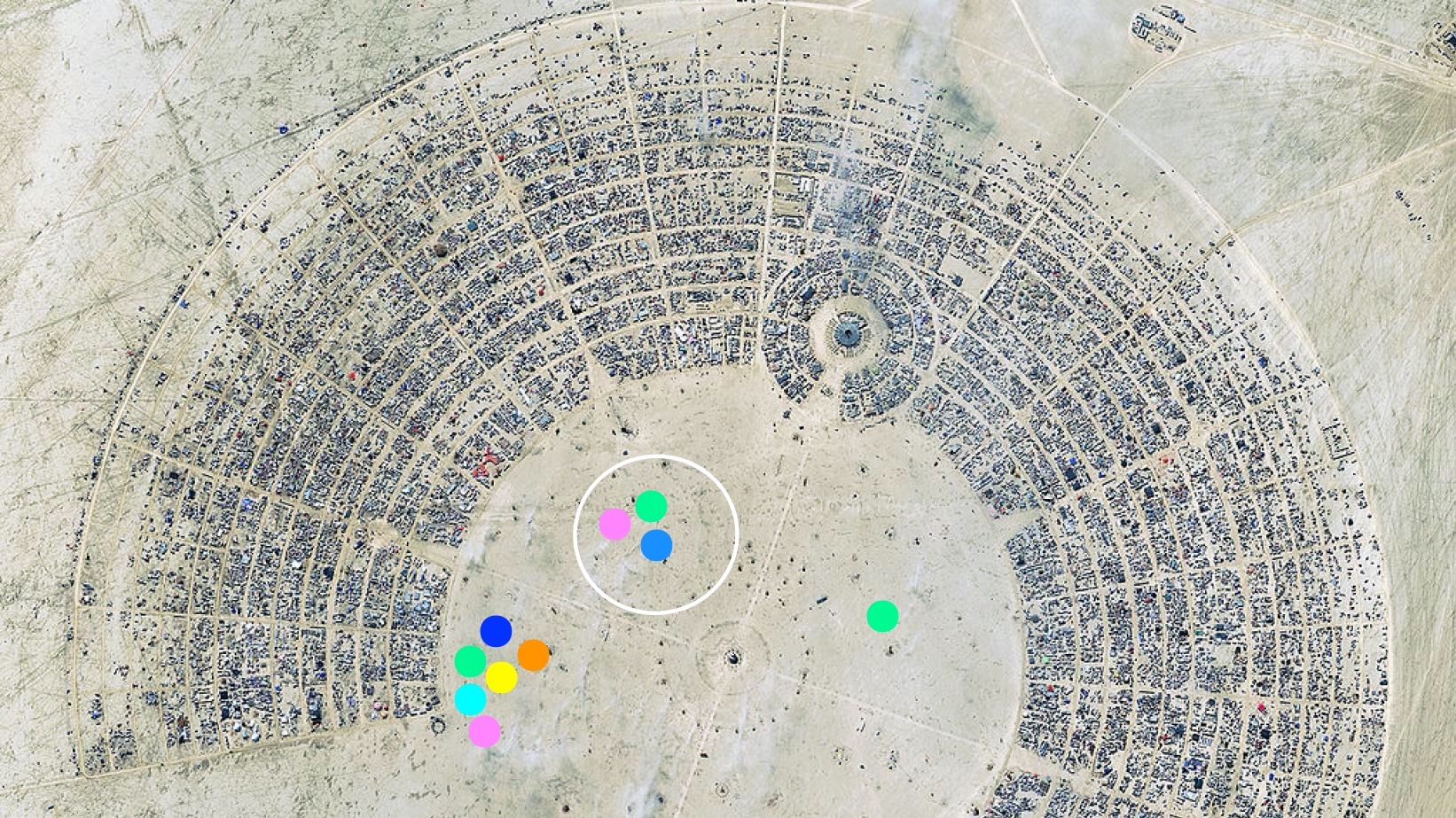
An unofficial mockup of High Fidelity’s early tests. Image Credits: DigitalGlobe (opens in a new window) / Getty Images
High Fidelity is currently using a satellite photo of Burning Man as its test map. It allows DJs to set up in different corners, and listeners to stroll between them or walk off with a friend to chat, similar to the real offline event. Since Burning Man was cancelled this year, High Fidelity could potentially be a candidate for holding the scheduled virtual version the organizers have promised.
Houseparty’s former CEO Ben Rubin and Strivr VR employee training startup founder Brian Meek are building a spontaneous teamwork tool called Slashtalk. Rubin sold Houseparty to Fortnite-maker Epic in mid-2019, but the gaming giant largely neglected the app until its recent quarantine-driven success. Rubin left.

His new startup’s site explains that “/talk is an anti-meeting tool for fast, decentralized conversations. We believe most meetings can be eliminated if the right people are connected at the right time to discuss the right topics, for just as long as necessary.” It lets people quickly jump into a voice or video chat to get something sorted without delaying until a calendared collab session.
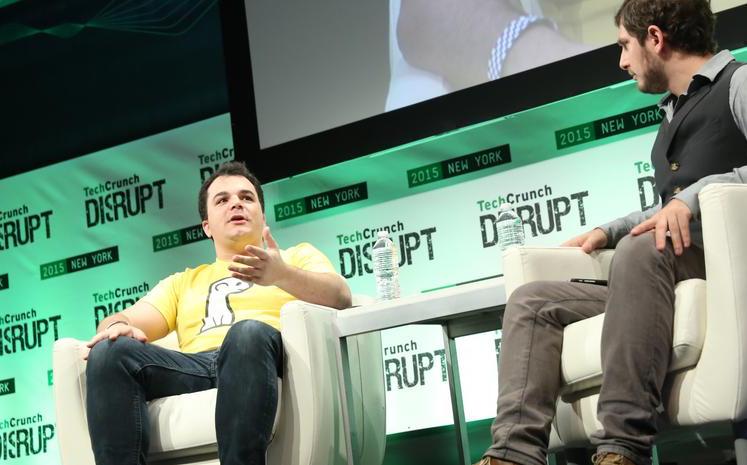
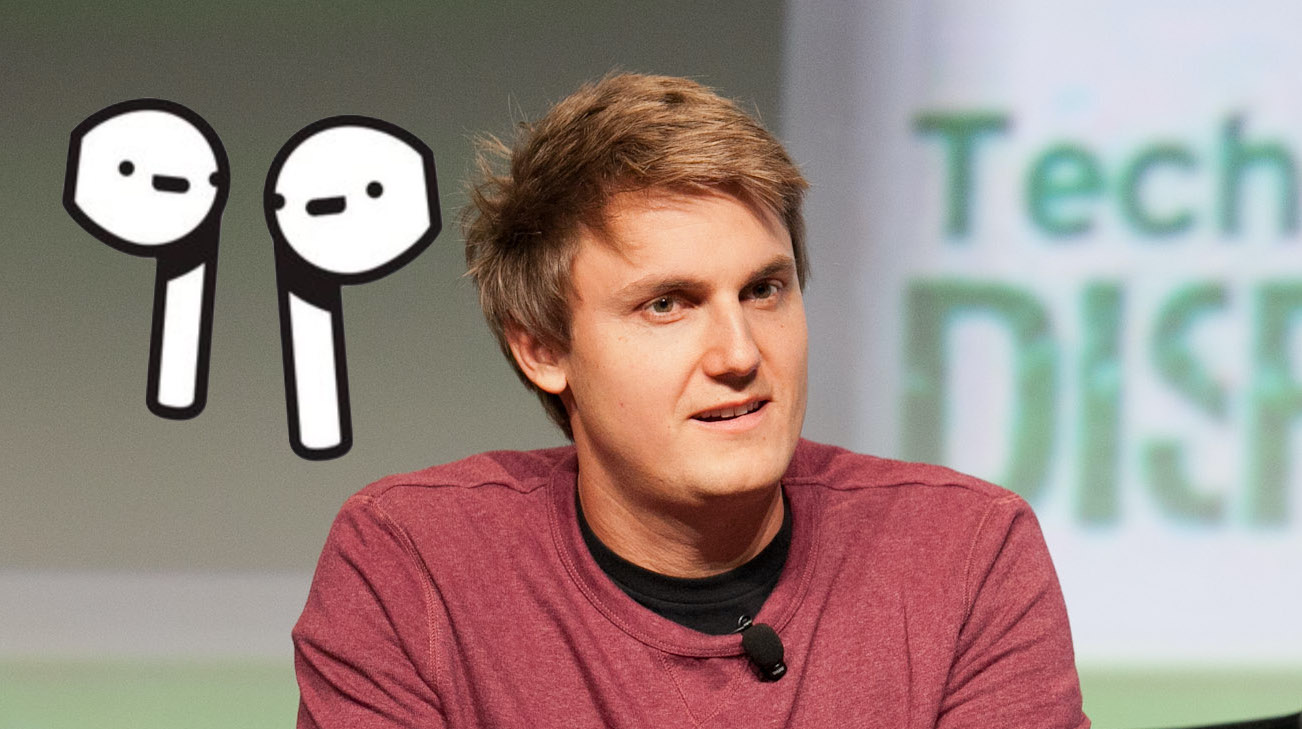
Slashtalk co-founder Ben Rubin at TechCrunch Disrupt NY 2015
Whether for work or play, these spontaneous apps can conjure times from our more unstructured youth. Whether sifting through the cafeteria or school yard, seeing who else is at the mall, walking through halls of open doors in college dorms, or hanging at the student union or campus square, the pre-adult years offer many opportunities for impromptu social interation.
As we age and move into our separate homes, we literally erect walls that limit our ability to perceive the social cues that signal that someone’s available for unprompted communication. That’s spawned apps like Down To Lunch and Snapchat acquisition Zenly, and Facebook’s upcoming Messenger status feature designed to break through those barriers and make it feel less desperate to ask someone to hang out offline.
But while socializing or collaborating IRL requires transportation logistics and usually a plan, the new social apps discussed here bring us together instantly, thereby eliminating the need to schedule togetherness ahead of time. Gone too are the geographic limits restraining you to connect only with those within a reasonable commute. Digitally, you can pick from your whole network. And quarantines have further opened our options by emptying parts of our calendars.
Absent those frictions, what shines through is our intention. We can connect with who we want and accomplish what we want. Spontaneous apps open the channel so our impulsive human nature can shine through.


 Wednesday, April 15, 2020MZ Digital Marketing AgencyTECHNOLOGY NEWSNo comments

Google may start adjusting the quality of video captured by your Nest security camera to help ease the strain put on broadband networks. The company is making the changes at a time when more people than ever are using internet-connected devices at home during the COVID-19 pandemic.
“To answer the global call to prioritize internet bandwidth for learning and working, in the next few days we’re going to be making a few changes,” Google said in a statement to The Verge. “We believe these changes have the potential to help make it easier for communities to keep up with school, work, and everything in between.” Nest users on Twitter first reported receiving an email from Google announcing the changes.
If you’re in the US and your Nest’s camera quality and bandwidth settings are higher than the default, Google will be rolling those settings back to the default, the company tells The Verge. If your settings are lower than the default, they will remain the same. Regardless of what your quality and bandwidth settings are, no other settings on your Nest camera will change, the company says.
And if you want to revert your quality and bandwidth settings back to the way you had them before, you can do that, according to Google. That might be something you want to do if you actively rely on your Nest camera to keep track of what’s going on around your home, as reduced video quality may make it harder for you to make out what’s happening on your Nest video feed.
If you don’t change your settings after Google reduces the quality, the company plans to roll the settings back to the way you had them before once networks are less inundated with traffic, Google says.
You might also see changes with Ambient Mode slideshows from Nest displays, Chromecast, and Cast devices — as Google is reducing the rotation interval and the resolution of photos in those slideshows globally, the company tells The Verge.
Reducing how much bandwidth its Nest devices use isn’t Google’s first move to help ease the amount of traffic on broadband networks — the company reduced YouTube’s default video quality to standard definition (480p) on March 24th. Amazon, Apple, and Netflix have also reduced video their quality in Europe to help keep broadband networks working smoothly, while Sony has reduced download speeds for its PlayStation Network in both Europe and the US.
Tuesday, April 14, 2020MZ Digital Marketing AgencyTECHNOLOGY NEWSNo comments Illustration by Alex Castro / The Verge
Google has confirmed that it will use the Google Play Services infrastructure to update Android phones with the upcoming COVID-19 contact tracing system it is building in collaboration with Apple. It should ensure that more Android phones will actually get the updates, and also ensure that they become available on phones running Android 6.0 Marshmallow or above.
Until today, it was an open question, but one that was vital for Google to answer. That’s because Google Play is the only reliable system that exists for getting software updates pushed out to Android phones in a timely manner. The other way — full operating system updates — is often fraught with delays from both carriers and manufacturers.
Google says that its update system will apply to both phases of the Bluetooth contact tracing framework — the initial API rollout, which is due next month, and the next stage, which will see the APIs built into the OS. The companies will say only that the second stage will arrive “in coming months.”
There is one huge set of Android devices that don’t benefit from Google Play services: all of the Android phones in China, as well as any Huawei phones sold around the world after the imposition of restrictions by the US. Google is not allowed to export software to Huawei, which means it could not apply this system to its phones just as it cannot include Chrome or Gmail.
For those phones, Google intends to publish a framework that those companies could use to replicate the secure, anonymous tracking system developed by Google and Apple. It will then be up to Huawei, Xiaomi, and other Chinese manufacturers (or the Chinese government) to decide whether to use the system.
That’s the strategy Google uses for its Project Mainline system of updates, launched last year for more recent versions of Android. However, Project Mainline updates are explicitly open sourced. Google declined to comment on whether this system would be, but did note that it will offer code audits to companies that want to adopt a similar system.
Tuesday, April 14, 2020MZ Digital Marketing AgencyTECHNOLOGY NEWSNo comments Illustration by Alex Castro / The Verge
Reddit is launching a new subreddit that will list all political ad campaigns that have run on the site since January 1st, 2019, the company announced today. The new subreddit can be found at r/RedditPoliticalAds.
“In this community, you will find information on the individual advertiser, their targeting, impressions, and spend on a per-campaign basis,” Reddit said in its announcement post. “We plan to consistently update this subreddit as new political ads run on Reddit, so we can provide transparency into our political advertisers and the conversation their ad(s) inspires.”
Reddit is also updating its policies for political advertising to require political campaigns to work with Reddit’s sales team on ads and to require political advertisers to leave comments on for the first 24 hours an ad campaign is live. However, advertisers can moderate the comments on the ad posts, according to a Reddit admin, so an advertiser could remove comments they don’t want shown under the ad, in theory.
r/RedditPoliticalAds will only feature ads that actually run on Reddit, the admin said. If ads are mistakenly approved and then removed, information about those ads will remain on the subreddit, but they’ll have a flair attached to their title that says the ad was “Approved in Error.”
Reddit joins Facebook in having a political ad database. Twitter, however, has bowed out entirely from having political ads on the site, announcing in October that it would ban all political ads globally starting in November. “We have made this decision based on our belief that political message reach should be earned, not bought,” Twitter says on its political content policy page.
Monday, April 13, 2020MZ Digital Marketing AgencyTECHNOLOGY NEWSNo commentsThe push for ever-smaller chips has been running into more and more obstacles, including the very limits of silicon — while optical connections would allow for denser, speedier processors by eliminating heat and energy issues, silicon is lousy at emitting light. Or rather, it was. Eindhoven University of Technology researchers have developed what they say is the first silicon alloy that can emit light. The breakthrough is a mix of silicon and germanium in a hexagonal structure that allows a band gap (and thus emitting light).
Scientists have been pursuing this for about 50 years, the university said, and a team created hexagonal silicon back in 2015. However, they couldn’t get the result to emit light until now, when they reduced the number of impurities and defects.
The team still needs to produce a laser before they have technology that could be used in chips, and there would still be plenty of refinement left before you would see this in shipping electronics. That laser is expected in 2020, though. And this latest development was arguably the largest hurdle. From now on, the main challenge is making the technology practical.
Friday, April 10, 2020MZ Digital Marketing AgencyTECHNOLOGY NEWSNo comments Image: imisstheoffice.eu
Even though I’ve worked from home for more than three years, it can still get lonely at times. My apartment is usually very quiet and almost all of my conversations with my colleagues happen silently over Slack, save for the clatter of my mechanical keyboard. I worked in an office for the first part of my career, and at times, I get nostalgic for the white noise of an office — the idle chatter, the whirring of a too-cold air conditioning system, and other people clattering away at their keyboards.
If the pandemic has left you surprisingly nostalgic for your office, imisstheoffice.eu, made by Kids Creative Agency, might be the closest thing to actually being back there. When you load up the site, hit the play button in the bottom-left corner and it will play a lot of sounds that are common at most offices: indecipherable snippets of conversation, a fan blowing somewhere, phones ringing, and more. There’s even someone who annoyingly smacks their lips.
The site isn’t just a white noise generator, though — it also has an office layout that you can click around to activate certain sounds. Click the water cooler, for example, and you’ll hear the sound of water filling up a cup. Clicking the printer activates the familiar sounds of a printer. The chairs make farty noises as if someone was sinking down into them. And you can even activate the sounds of a ping-pong match.
The site is a fun reminder of the office environment that you might have taken for granted. And the best part is you won’t have to suffer through a commute to feel like you’re working side-by-side with your colleagues again.
Tuesday, April 07, 2020MZ Digital Marketing AgencyTECHNOLOGY NEWSNo comments
Enlarge / "Your mother was a hamster and your father smelt of elderberries!" Monty Python' and the Holy Grail's family-friendly approach to swearing handily avoids the F-word. (credit: YouTube/Funny or Die/Monty Python)
Scotland has much to recommend it: impressive architecture, gorgeous Highlands, and a long, distinguished intellectual tradition that has spawned some of the Western world's greatest thinkers over several centuries. It's also, apparently, home to a medieval manuscript that contains the earliest known usage of the swear word "F#$%."
The profanity appears in a poem recorded by a bored student in Edinburgh while under lockdown as the plague ravaged Europe—something we can all relate to these days. The poem is getting renewed attention thanks to its inclusion in a forthcoming BBC Scotland documentary exploring the country's long, proud tradition of swearing, Scotland—Contains Strong Language.
The Bannatyne Manuscript gets its name from a young 16th-century Edinburgh merchant named George Bannatyne, who compiled the roughly 400 poems while stuck at home in late 1568, as the plague ravaged his city. It's an anthology of Scottish literature, particularly the texts of poems by some of the country's greatest bards (known as makars) in the 15th and 16th centuries. According to a spokeswoman for the National Library of Scotland (where the manuscript is housed), "It has long been known that the manuscript contains some strong swearwords that are now common in everyday language, although at the time, they were very much used in good-natured jest."
Read 5 remaining paragraphs | Comments

 Monday, April 06, 2020MZ Digital Marketing AgencyTECHNOLOGY NEWSNo commentsFriday, April 03, 2020MZ Digital Marketing AgencyTECHNOLOGY NEWSNo comments
 Illustration by Alex Castro / The Verge
An automated tool developed by security researchers is able to find around 100 Zoom meeting IDs in an hour and information for nearly 2,400 Zoom meetings in a single day of scans, according to a new report from security expert Brian Krebs.
Security professional Trent Lo and members of SecKC, a Kansas City-based security meetup group, made a program called zWarDial that can automatically guess Zoom meeting IDs, which are nine to 11 digits long, and glean information about those meetings, according to the report.
In addition to being able to find around 100 meetings per hour, one instance of zWarDial can successfully determine a legitimate meeting ID 14 percent of the time, Lo told Krebs on Security. And as part of the nearly 2,400 upcoming or recurring Zoom meetings zWarDial found in a single day of scanning, the program extracted a meeting’s Zoom link, date and time, meeting organizer, and meeting topic, according to data Lo shared with Krebs on Security.
Automated Zoom conference meeting finder 'zWarDial' discovers ~100 meetings per hour that aren't protected by passwords. The tool also has prompted Zoom to investigate whether its password-by-default approach might be malfunctioning https://t.co/dXNq6KUYb3 pic.twitter.com/h0vB1Cp9Tb
— briankrebs (@briankrebs) April 2, 2020
In January, security researchers at Check Point Research said Zoom had implemented a feature that would block repeated attempts to scan for meeting IDs following their own disclosure of a way to identify valid Zoom meeting IDs. zWarDial avoids Zoom’s blocking by routing searches through Tor, Lo said to Krebs on Security.
However, zWarDial can’t find meetings that are password-protected, according to Lo. By default, Zoom says it password-protects new meetings, instant meetings, and meetings accessed by manually entering a meeting ID, so the fact that zWarDial is able to find around as many meeting IDs as it can suggests that many Zoom meetings still don’t have a password.
If you want to password-protect your meetings yourself, you can do that in the Zoom app by going to the “Meetings” tab, clicking the “Edit” button under your personal meeting ID, checking the “Require meeting password” checkbox, and then entering a password to use for your meetings. The steps are similar on the mobile app.
Zoom usage has shot up dramatically as more people have come to rely on the video conferencing app during the COVID-19 pandemic, but that increased usage has cast a spotlight on a litany of security and privacy issues with the service.
For example, trolls have been able to “Zoombomb” calls, an issue with Zoom’s “Company Directory” setting could leak user emails and photos, and Zoom confirmed to The Intercept that video calls on the app aren’t end-to-end encrypted like the company claims. To help address these issues, Zoom has announced a 90-day freeze on releasing new features and will focus on fixing privacy and security issues.